On the carpetSticky spots and dull walking lanes
Comes firstYour technician checks the carpet's fibers and the dirt in the walking lanes, then chooses a cleaning method.
Choosing by Soil and Fiber
- Steam cleaning rinses loosened soil from carpet, while dry methods use less moisture; the carpet's care instructions and soil determine the choice.
- Bonnet cleaning mainly addresses surface soil, while shampoo methods need a separate step to collect loosened dirt and cleaning residue.
- Drying depends on remaining moisture and airflow, so room access belongs in the cleaning plan.
Cleaning Methods Handle Soil in Different Ways
The difference is how dirt leaves the carpet: steam cleaning uses a water rinse and suction, while dry methods collect soil with less added moisture. Which approach fits your carpet depends on its care instructions, construction, and the kind of soil. Call with the room's main problem, whether it is sticky drink residue or a dark walking lane.
Embedded soil and water extraction
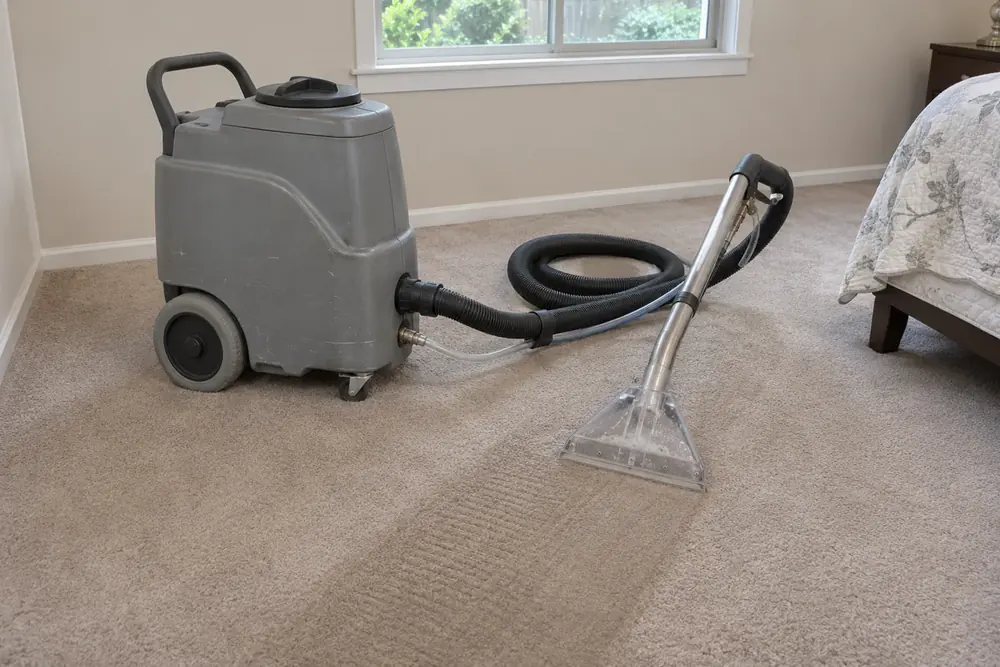
Hot water extraction loosens dirt with cleaning solution and draws dirty liquid back into a machine. The Carpet and Rug Institute describes steam cleaning as another name for deep cleaning by hot water extraction.
For steam carpet cleaning services, the useful discussion starts with the dirty areas and what spilled there. Tell your technician about coffee, tracked dirt, or earlier spot treatments. A dark patch alone does not identify the spill, and cleaning cannot reverse every color change.
Surface dirt and lower moisture
Dry methods collect soil without the same water rinse, but they still need a way to remove the cleaning material. Absorbent material can be brushed through the fibers and then vacuumed out, or an absorbent pad can collect dirt from the surface.
| Method | How it works in plain words | Where it tends to fit |
|---|---|---|
| Hot water extraction | Applies solution, rinses fibers, and sucks up dirty liquid | Embedded dirt on carpet that permits wet cleaning |
| Dry absorbent compound | Works absorbent material through fibers, then vacuums it out | Compatible carpet needing cleaning with less moisture |
| Bonnet | Moves an absorbent pad across the carpet surface | Surface maintenance where the carpet's instructions allow it |
| Shampoo | Works cleaning foam or solution through fibers, then collects soil and residue | Soil needing agitation on carpet that tolerates the method |
Nearby steam carpet cleaners should explain why a rinse fits the soil rather than choosing from the appearance of the carpet alone. A steam carpet cleaner discussing a local job also needs to know about delicate fibers and loose seams.
Sticky soil and shampoo residue
Shampoo cleaning needs soil collection after the brushing step. After brushing loosens the dirt, suction removes the dirty liquid and remaining cleaning material.
A carpet cleaning company using steam extraction may discuss extra attention for sticky lanes. Ask how the loosened material will leave the carpet. More foam does not tell you how much dirt was collected.
Loose dirt and the visit sequence
Loose grit comes out first through vacuuming, followed by treatment suited to the remaining spots. The work generally includes preparing the furniture area, vacuuming, applying cleaning solution, rinsing, and using airflow to help the carpet dry.
Discuss furniture during the call. Identify the sofa, beds, and cabinets so your technician can explain the planned access. Carpet steam cleaning around fixed furniture leaves a different working area from cleaning an empty room. Say which spaces need attention rather than assuming every item will move.
Damp fibers and room access
Remaining moisture and air movement affect when carpet is ready for use. Follow the drying instructions for the method used, including where to place a fan and when furniture can return. Keep children and pets away from damp areas.
When comparing steam carpet cleaning with dry methods, include the rooms you need to walk through afterward. One of our local carpet cleaning partners will outline the work and its cost before cleaning begins. A call can cover room access, spot treatment, and drying together.